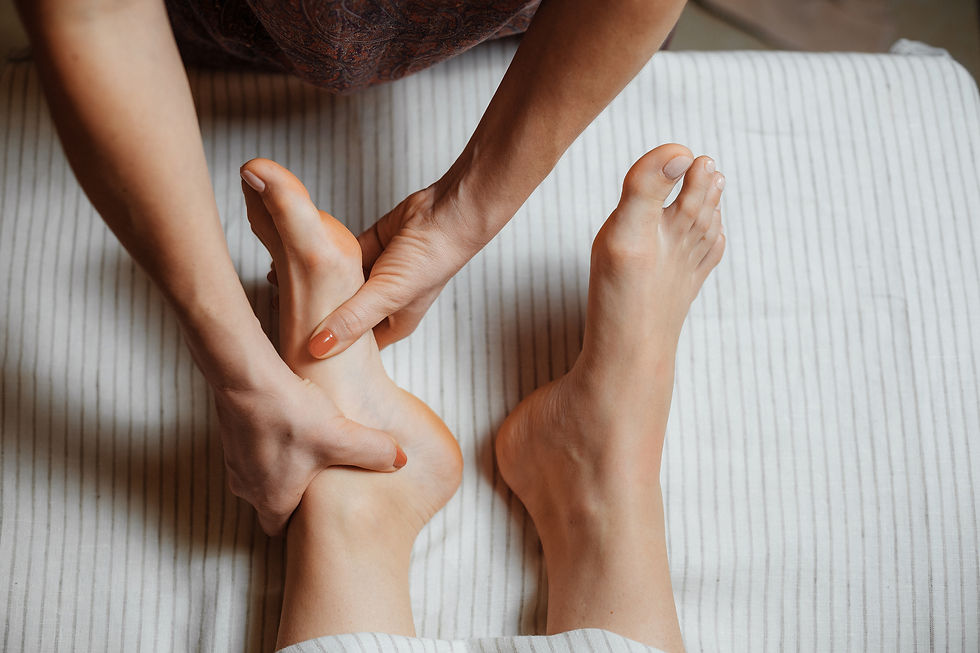
Although some massage therapists may have a basic knowledge of reflexology with 8- 30 hours of training; a foot or hand massage that uses some reflexology techniques is a significantly different experience than a reflexology session from a professionally trained Reflexologist with 200 or more hours of reflexology-only education.
Though many of the benefits are the same, massage is based on the therapeutic manipulation of the soft tissues (fascia, muscles, tendons, and ligaments), superficial and deep, over the entire the body. The massage therapist using moderate to deep pressure will utilize a variety of techniques involving fingers, hands, forearms and elbows. The massage client is usually unclothed, but draped, during the massage.
Reflexology, by contrast, utilizes very light to moderate touch on the skin’s surface to induce relaxation using unique-to- reflexology thumb and finger techniques. The reflexology client removes only shoes and socks to experience a reflexology session.
What can one expect during a Reflexology session? Usually, a session begins with a client health intake and interview. You may be asked to sign a consent form. Your reflexologist will explain what to expect in the session and answer any questions you may have. S/he will also inform you that reflexology does not treat specific illnesses and is not a substitute for medical treatment. The session takes place with the client fully clothed, except for sock and shoes, while reclining in a chair or lying on a therapeutic table. The practitioner will begin by cleaning and assessing your feet for open wounds, rashes, sores, plantar warts or bunions and will ask you about any foot or leg pain. Once complete, the session will begin.
The application of Reflexology should not be painful or leave bruising /discomfort after a session. Reflexology is generally applied using light to moderate touch with the fingers and thumbs, not tools. The practitioner should make every effort to utilize the appropriate pressure for each individual. Since we generally don’t spend time having our feet/hands/ears touched, during a session one may notice unexpected sensitivity, which may due to footwear, usage or clothing; or the sensitivity may be an indication of where the body is holding tension.
A reflexology session can range in time from a 30 mins to 90 mins. Depending on the training and experience of the practitioner, expect to pay between $60-$150+ for an hour session.
When seeking reflexology, it is of the utmost importance to be an informed consumer. Currently in the Commonwealth of Massachusetts there is not a state law governing the practice of Reflexology, though many towns and cities have their own regulations that vary in requirements. There are some businesses that say they offer “reflexology” and “bodywork” but are actually fronts for human trafficking. Their staff don’t have formal training in reflexology, anatomy, physiology, pathology or universal precautions, which not only misrepresents the services they claim to provide, but more troubling, put the health and well being of the public at risk.